It’s no secret that women in perimenopause lose bone density and muscle mass at a quicker rate than pre-perimenopause.
But many women struggle to connect their aches and pains to perimenopause.
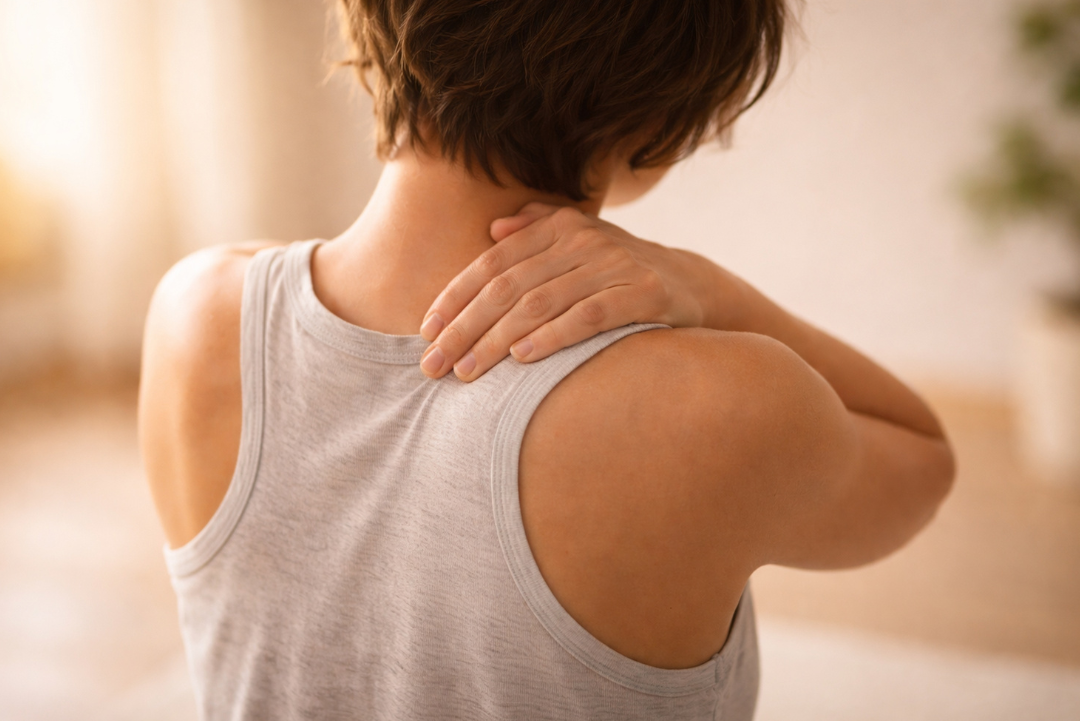
One of the biggest problem areas I’ve seen for perimenopausal women is their shoulders.
It seems like overnight they suddenly have a squeaky shoulder. There’s more stiffness, pain, and sometimes even a frozen shoulder.
Why do you experience more shoulder issues during perimenopause?
There are 5 reasons you have more shoulder issues – whether it’s pain, clicking, or a frozen shoulder – during your perimenopause years.
The decline of estrogen and your connective tissue
As estrogen begins to decline during your perimenopausal years, your connective tissue in your body changes.
Estrogen plays an important role in collagen, elasticity, and joint lubrication. As estrogen lessens in your body, your tendons and ligaments become more stiff and less flexible. Your collagen also starts to turn over, causing your muscles and ligaments not to repair quite as well. And your joint lubrication decreases.
Because your shoulder is already highly mobile (the most mobile joint in your body) and an unstable joint, this is often where the first signs of declining estrogen show up, making your shoulder the weak link.
Increased inflammation
Hormonal shifts, like entering perimenopause, increase your baseline inflammation levels.
Your stress levels, gut health, and blood sugar directly impact your inflammation levels as well. If they are off balance, inflammation is higher, and you will experience more tendon irritation, sensitivity to pain, and longer recovery times between workouts.
Muscle mass and strength changes
As you’re likely aware, in perimenopause women gradually lose muscle mass, especially if you are not adapting your training and your nutrition to your changing hormone levels.
Without proper training and form, this can lead to compensations with your workouts. Specifically, weak rotator cuffs and upper back muscles that lead to overcompensation in your traps and your neck will cause poor form and irritate and potentially injure your shoulders over time.
Shifts to your nervous system and pain perception
Hormonal shifts impact your tolerance to pain and your nervous system sensitivity.
Meaning, your pain tolerance is lower and some of the nagging issues that you had previously and didn’t register are suddenly impacting your life. With that, you also feel pain more intensely, making the nagging issues more difficult to ignore.
No adjustments to your lifestyle or training
When you’re in your 20s and 30s, you are more resilient to stress brought on by training and your lifestyle. But as you enter perimenopause, how you approached training and your lifestyle need to be adjusted to support your changing hormones.
If you continue to workout as hard as you did in your 20s and 30s, you will find quickly that you’re wearing yourself down and have more of a potential for injury.
Also, it’s not uncommon for you to become more sedentary as you age.
This means that too much intensity can lead to poor recovery and injury in return. But too little movement can lead to more stiffness and loss of mobility.
What Actually Helps Your Shoulder During Perimenopause
Though your estrogen decline is out of your control during perimenopause, this doesn’t mean you need to deal with a squeaky, painful, or frozen shoulder.
Here are 5 things you can focus on to prevent shoulder pain and discomfort during perimenopause:
Focus on strengthening your small stabilizes.
This means your rotator cuff, lower traps, and your serratus anterior. If you want movement recommendations, check out THIS Instagram post.
Prioritize mobility.
This doesn’t mean just stretching, but active and full range of motion movements, even when you’re lifting weights.
Support collagen and tissue health.
Protein, vitamin C, and glycine-rich foods (like bone broth and fattier proteins) will help support your collagen and tissue health.
Manage your inflammation.
Stabilize your blood sugar, prioritize your gut health, and lower your stress levels to keep your inflammation levels in check.
Adjust your workouts.
You may need more recovery time, so it’s important to adjust your workouts to train smarter, not harder. You will still get results!
In Conclusion…
Perimenopause comes with a whole bunch of symptoms, from hot flashes to pesky weight gain to wondering if your period is finally done to the mood swings. But one of the first signs of perimenopause is a stiff shoulder (or other joints!).
Don’t ignore it! You can start implementing the tips in this article – even if you don’t believe you’re in perimenopause just yet.
One of the best things you can do to prepare for perimenopause is to be proactive. You don’t need to live with perimenopause symptoms.
If you want to chat more about your perimenopause symptoms and what personalized coaching would look like for you, let’s schedule a complimentary Hormone Analysis call!