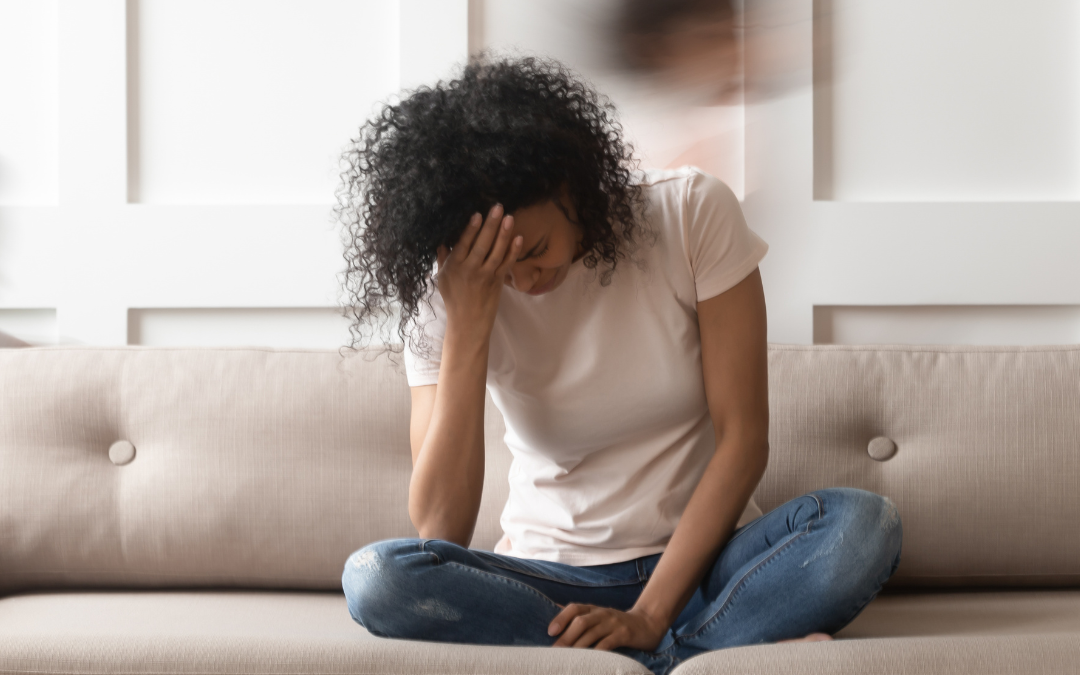
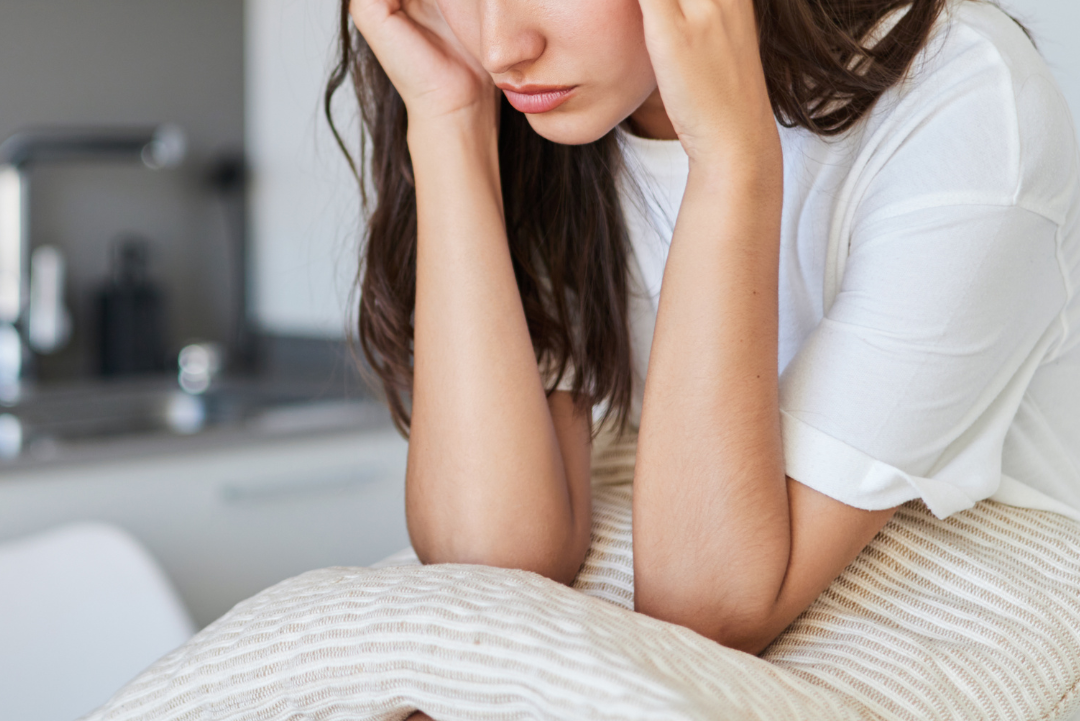
For the longest time, my biggest period symptom was the anxiety that came about 7 days before my period started.
I would have out of body mood swings, mostly directed at my husband. I struggled to sleep. I overthinked everything. I felt on edge and anxious for about a week. Everything felt like an out of body experience.
Then, when my period started, I had instant relief. I felt normal again. That “on edge” feeling went away – poof!
Can you relate to this?
Anxiety around your period, though common for a lot of women, is not normal.
Why You Get Period Anxiety
Anxiety can get worse around your period, during perimenopause, or if you’re postpartum. All three of these have shifting hormones in common.
Specifically, your estrogen and progesterone levels contribute to how you experience anxiety.
If you have chronic stress or high cortisol, you may also have more anxiety.
If your thyroid levels are imbalanced, your thyroid can contribute to your anxiety.
Finally, if your blood sugar is imbalanced, your anxiety may also be worse.
Reducing your Period Anxiety
The good news is, you have a lot in your control to help manage your anxiety and balance your hormone levels.
Here are 5 ways to reduce your period anxiety:
Balance your blood sugar
When your blood sugar is all over the place, on a rollercoaster ride, it will directly impact your anxiety levels. For example, if you are on the sugar rush and then have a crash, your anxiety will be worse.
To balance your blood sugar, make sure you are eating every 3 to 4 hours, even a smaller snack.
For your larger meals, fill your plate with protein, veggies or fruit, starchy carbs, and healthy fats. For your snacks, try to prioritize your protein and pair it with a carb or a fat.
Support your serotonin naturally
Your serotonin stabilizes your mood, sleep, appetite, digestion, and sex drive. It’s known as your natural mood stabilizer hormone and influences how you perceive your wellbeing.
To help support your serotonin,
- Get 15 or more minutes of sunlight or light therapy per day, especially in the winter months
- Make sure you are consistent with a physical activity / movement routine
- Eat foods rich in tryptophan, including turkey, eggs, nuts, and seeds
- Pair your tryptophan foods with carbs to help the tryptophan reach your brain
- The majority of your serotonin is made in your gut, so having fermented foods and gut friendly foods helps
- Avoid artificial sweeteners and overly processed foods
- Consider supplement with B6, B12, magnesium, and probiotics
Lower your stress levels
Stress isn’t a bad word. It’s natural and everyone has it. But when you are chronically stressed, it will deplete your energy and hormone levels, including your serotonin, making anxiety worse.
Managing your stress will be unique to you. Some people thrive with meditation and breathwork, others feel better getting into the sun or having a coffee date with their friends.
When deciding what works best for you with managing your stress, think of things you can do proactively, not reactively.
Check your progesterone levels
Progesterone is the hormone that regulates your menstrual cycle, prepares your uterus for pregnancy, and supports early pregnancy.
Progesterone also works with your estrogen to support your bone density. It helps manage pain and decrease your pain sensitivity, as well as supports your brain health.
When in range, progesterone has a calming effect on the body. However, when it’s out of range or low, you may have worsened mood swings and anxiety, irregular or heavier periods, spotting between periods, and lower sex drive.
Talk to your doctor about your symptoms and get a hormone blood panel done to see if low progesterone is contributing to your anxiety.
Support your thyroid health
Your thyroid controls your metabolism, body temperature, energy levels, heart rate, digestion, and more. Your thyroid also impacts your nervous system and mood stability.
Both hyperthyroidism (overactive thyroid) and hypothyroidism (underactive thyroid) are linked to heightened anxiety.
To naturally support your thyroid,
- Avoid overly processed foods
- Try a gluten free diet
- Manage your stress levels
- Have a consistent movement routine
- Incorporate iodine, selenium, zinc, vitamin D, and B12 into your diet
If you think you have thyroid issues, please consult with your doctor.
In Conclusion…
Symptoms are not normal. They are a whisper from your body that something needs some TLC beneath the hood – and that includes heightened anxiety right before your period.
If you’re struggling with out of body mood swings and anxiety 7 to 10 days before your period starts, which of these tips can you focus on first?
Remember, it’s about being proactive, not reactive to improve your period symptoms, especially anxiety.
Curious how personalized Hormone Coaching would look for YOU? Schedule a complimentary Hormone Analysis Call and let’s chat!