Can you relate to this? It’s the week before your period and you haven’t gone to the bathroom in days!
Your jeans feel tight. You feel bloated. You feel heavy and uncomfortable in your skin.
Then your period starts and suddenly you’re running to the bathroom several times and wondering when it will stop.
You have the infamous period poops.
If this sounds familiar to you girl, you’re not imagining it. Your hormones and your gut are in a constant conversation with each other, causing both of these to happen around your period..
Though this may be a common occurrence for you or in your girl friends, this is not normal. Constipation is one of those whispers from your body that something needs a little TLC under the hood.
What “normal” actually looks like
If you ask your doctor, “normal” is anywhere between having a bowel movement three times per day to having one three times per week. But you should be aiming for what’s regular for you! Ideally, you should be going to the bathroom daily, without any straining or pain, and feeling like you’ve gone to completion.
A lot of people believe constipation just feels like you’re backed up, but you may be dealing with constipation if
- You’re going fewer than three times per week
- You have hard, dry, or pebble like stool
- You are straining or pushing
- You feel like you didn’t fully “finish”
- You’re bloated, gassy, heavy, and sluggish feeling
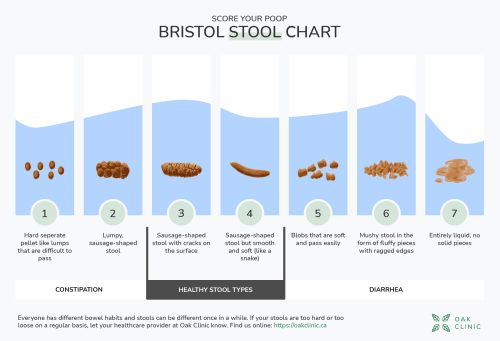
If you consider the Bristol Stool Chart (yes, I’m fun, I gift this at White Elephant parties…), the goal for your bowel movements is to be type 3 or 4.
The Why: How Your Cycle Impacts Digestion
When you feel more backed up as you get closer to your period, this is on a hormonal level. Here’s what’s going on under the hood:
Your Progesterone slows things down
After you ovulate, your progesterone levels start to rise. Progesterone is your calming hormone and helps your muscles (including your GI tract) relax.
When your GI tract relaxes, it slows digestion down, which causes more water to be pulled from your stool, leading to constipation, bloating, and harder stool.
Progesterone is the main culprit for constipation before your period begins.
The Prostaglandins speed things up
Right before your period starts, progesterone levels drop and prostaglandins rise.
Prostaglandins’ job is to help the uterus contract to shed your uterine lining. But they don’t always stay in the uterus – they also make your bowels contract.
If you’ve already been backed up the week before your period starts, now the prostaglandins are rushing in to cause loose bowel movements or diarrhea on days one and two of your period.
High prostaglandins are also linked to more painful cramps, which is why you may have painful cramps and diarrhea at the same time. If you have painful periods, check out the From Painful to Pain-Free Periods ebook.
Estrogen and your gut work as a team
Your gut helps clear out estrogen through your stool. But when you’re constipated, estrogen sits in your gut longer and some of it can be reabsorbed back into your body (gross, I know).
This can contribute to estrogen dominant symptoms like heavier periods, breast tenderness, PMS, and mood swings.
I say it all the time, but your period is a receipt for your internal health, and that includes your poop and bowel movements! Going to the bathroom regularly is a hormone balancing hack.
Cortisol shuts down your “rest and digest” state
If you’re living in constant stress, your body moves from “rest and digest” into “fight or flight” mode. When you’re in “fight or flight” mode, your body slows down digestion to preserve energy.
I know it’s frustrating, but our body doesn’t understand that it’s 2026 and we likely aren’t running from a bear, we are just sitting in a stressful meeting.
A few common things that can impact the “rest and digest” mode and switch it to “fight or flight” are eating on the go, eating at your desk, or eating in the car.
Though stress isn’t a bad word, chronically high cortisol from fast paced days, intense workouts, little rest or impacted sleep, and constant dieting, can be impacting your gut health.
A few other hormonal connections that are worth noting if you struggle with constipation:
- Thyroid: A sluggish thyroid can slow your gut down too. Constipation alongside fatigue, feeling cold, hair thinning, or weight changes may be worth talking to your doctor about your thyroid.
- Endometriosis: Endo can cause bowel symptoms, like painful movements during your period, “endo belly”, and alternating between constipation and diarrhea.
- PMOS: Blood sugar swings, insulin resistance, and gut microbiome changes are common with PMOS and can affect digestion.
- Iron: If you’re taking iron supplements (common with heavy periods), it can cause constipation. Talk to your doctor before changing anything if supplementing iron.
And if you don’t have a cycle?
If you’re in perimenopause, fluctuating estrogen and progesterone levels may be making your digestion unpredictable.
If you’re postmenopausal, lower estrogen may impact your gut motility and your gut microbiome.
And if you’re postpartum, shifting hormones, pelvic floor changes, iron supplements, lack of sleep, and changes in stress can slow things down too.
So, how can you support your digestion?
Nourish your body
- Slowly add fiber to your diet. The goal is 25g per day for women. If you increase too quickly, bloating can get worse!
- Focus on adding foods over cutting foods out. How can you add more berries, pears, apples, oats, beans, lentils, veggies, chia seeds and flaxseeds?
- If you’re feeling backed up, kiwis and prunes are a natural and gentle laxative
- Hydrate hydrate hydrate! Fiber needs water to do its job. If you’re dehydrated, your GI tract will move slower.
- Cook your veggies, especially during the luteal phase, to make them easier to digest.
- Make sure you are eating every 3 to 4 hours to support your blood sugar, help with cravings, and decrease bloating.
- Consider magnesium-rich foods like pumpkin seeds, leafy greens, avocado, and dark chocolate!
Move your body
- Walk after meals, even for 10 minutes, to help get things moving
- You don’t need more cardio or punishing workouts. Gentle and consistent movement is key
- Do deep belly breathing and gentle twists, especially during luteal phase
Consider your lifestyle
- Eat sitting down, undistracted, while chewing your food and slowing down!
- Start your morning with a warm beverage to stimulate your gut – think: water, tea, or coffee
- Don’t ignore the urge to go! It will make constipation worse
- Prioritize your sleep to support your cortisol levels and your rest and digest state
- Protect your peace to lower your stress
Track it!
- Track your bowel movements alongside your cycle (or your symptoms if you don’t have a cycle) for one to two months
- Noticing patterns will help you get proactive, instead of reactive. If you notice you get more back up during the luteal phase, you can add more support that week!
Get medical support
Though there’s a lot you can do on your own to get yourself regular, it’s important to know when to head to the doctor (and also why it’s important to track your movements and symptoms!).
Consider seeing a doctor if
- You have blood in your stool or it’s black and tarry
- You’re getting severe abdominal pain
- You have unexplained weightloss
- Your constipation lasts several weeks or there’s a sudden change in your bowel movements
- You’re having painful bowel movements during your period (this is a possible sign of endometriosis)
- You have thyroid symptoms like fatigue, feeling cold, hair thinning, or weight changes
- You have a family history of color cancer or bowel disease
Your doctor should run labs and see what’s going on. I’m here to support you alongside your medical team, not replace them.
In conclusion…
Your digestion changing throughout your cycle is not random. It’s your hormones talking to you.
The good news is, you have a lot of control!
Your hormone homework is to track your bowel movements next to your cycle or symptoms this month. What do you notice?
If you’re tired of feeling bloated, backed up, and not like yourself in your skin, let’s chat! Book a complimentary Hormone Analysis Call.
Not sure where to start? Take the free Hormone Symptom Analyzer Quiz!